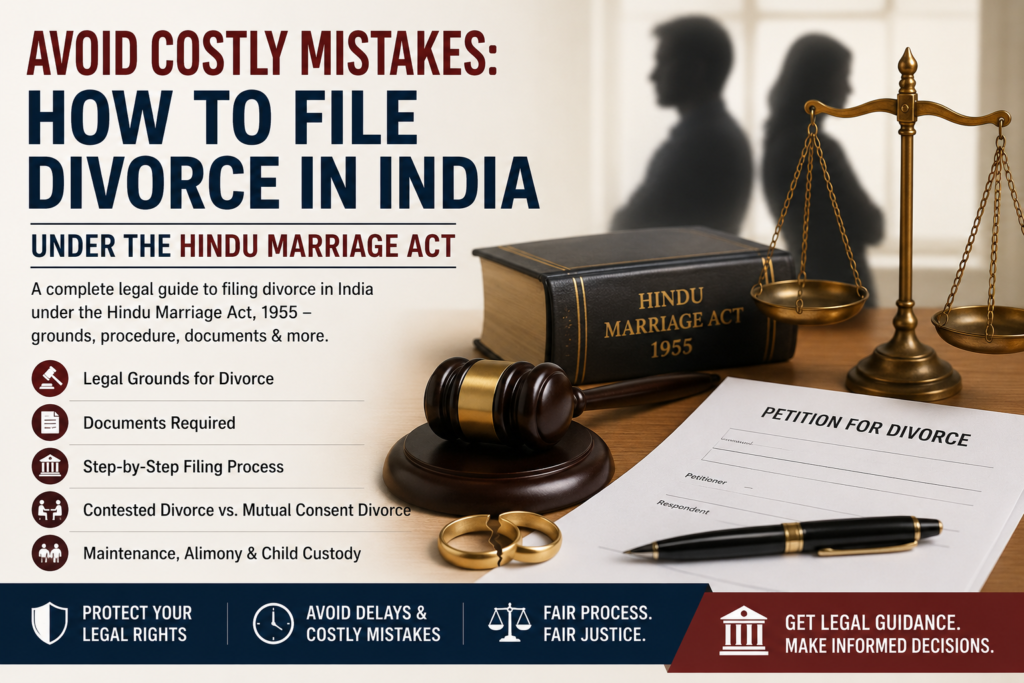
Avoid Costly Mistakes: How to File Divorce in India is a common concern for individuals considering the legal dissolution of their marriage. Filing for divorce is a significant legal step, and understanding the correct procedure under the Hindu Marriage Act, 1955 (HMA) can help you protect your rights and avoid unnecessary delays.
The Family Court decides divorce cases based on the evidence, facts, and applicable law—not on emotions or assumptions. Whether you are seeking a contested divorce or a divorce by mutual consent, knowing the legal process is essential.
How to File Divorce in India
The Hindu Marriage Act, 1955 governs divorce among Hindus, Buddhists, Jains, and Sikhs. The Act provides both contested divorce and mutual consent divorce.
Step 1: Identify the Legal Ground
A spouse may seek a contested divorce on one or more recognised grounds, including:
- Cruelty
- Adultery
- Desertion
- Conversion to another religion
- Mental disorder
- Renunciation of the world
- Presumption of death
If both spouses agree to end the marriage, they may jointly file a petition for mutual consent divorce under Section 13B of the Hindu Marriage Act.
Step 2: Gather the Required Documents
Before filing the petition, keep the following documents ready:
- Marriage certificate (if available)
- Identity and address proof
- Passport-size photographs
- Evidence supporting the grounds for divorce
- Income details (where maintenance is involved)
- Details relating to children, if any
Additional documents may be required depending on the facts of the case.
Step 3: Draft and File the Divorce Petition
The divorce petition should clearly state:
- Details of the marriage
- Facts leading to the dispute
- Legal grounds for divorce
- Information about children
- Relief sought from the Court
The petition is filed before the Family Court having territorial jurisdiction.
Step 4: Court Issues Notice
After the petition is filed, the Court issues notice to the other spouse, who is given an opportunity to file a written reply.
The Court may also refer the parties to mediation if reconciliation appears possible.
Step 5: Evidence and Trial
If the dispute is not settled, both parties present their evidence, including documents and witness testimony. The Court evaluates the evidence and hears the arguments of both sides before delivering its judgment.
Step 6: Decree of Divorce
If the Court is satisfied that the legal requirements have been met and the grounds for divorce have been established, it may grant a decree dissolving the marriage.
Court’s Powers in Divorce Cases
Family Courts have wide powers under the Hindu Marriage Act to:
- Grant or refuse a decree of divorce.
- Award interim maintenance and litigation expenses.
- Decide permanent alimony.
- Pass child custody and visitation orders.
- Refer parties to mediation.
- Decide connected matrimonial disputes.
The Court exercises its discretion based on the facts and circumstances of each case.
Can Divorce Affect Other Matrimonial Cases?
Yes. A divorce proceeding may also have implications for:
- Maintenance proceedings
- Child custody disputes
- Domestic Violence Act cases
- Restitution of Conjugal Rights petitions
- Permanent alimony claims
Each proceeding is decided independently, but the evidence in one case may be relevant in another where legally permissible.
Common Mistakes to Avoid
When learning How to File Divorce in India, avoid these common mistakes:
- Filing without understanding the legal grounds.
- Suppressing material facts or documents.
- Ignoring court notices or hearing dates.
- Relying solely on verbal allegations without evidence.
- Delaying legal action unnecessarily.
Seeking timely legal advice can help ensure that the petition is properly drafted and presented.
Conclusion
Understanding How to File Divorce in India under the Hindu Marriage Act enables spouses to make informed legal decisions. Whether the case involves a contested divorce or mutual consent, proper documentation, credible evidence, and compliance with court procedures are essential. Consulting an experienced family law advocate can help you navigate the process efficiently while protecting your legal rights.
At Riz Legal, we assist clients navigating complex matrimonial disputes with a focus on practical and legally sound outcomes.
You may contact us for consultation or advice by visiting Contact Us